Westminster Confession Of Faith – Lord’s Day 4

Chapter 2 – Of God, and of the Holy Trinity
I. There is but one only living and true God, who is infinite in being and perfection, a most pure spirit, invisible, without body, parts, or passions, immutable, immense, eternal, incomprehensible, almighty, most wise, most holy, most free, most absolute, working all things according to the counsel of his own immutable and most righteous will, for his own glory, most loving, gracious, merciful, long-suffering, abundant in goodness and truth, forgiving iniquity, transgression, and sin; the rewarder of them that diligently seek him; and withal most just and terrible in his judgments; hating all sin; and who will by no means clear the guilty.
II. God hath all life, glory, goodness, blessedness, in and of himself; and is alone in and unto himself all-sufficient, not standing in need of any creatures which he has made, nor deriving any glory from them, but only manifesting his own glory in, by, unto, and upon them; he is the alone foundation of all being, of whom, through whom, and to whom, are all things; and has most sovereign dominion over them, to do by them, for them, or upon them, whatsoever himself pleaseth. In his sight all things are open and manifest; his knowledge is infinite, infallible, and independent upon the creature; so as nothing is to him contingent or uncertain. He is most holy in all his counsels, in all his works, and in all his commands. To him is due from angels and men, and every other creature, whatsoever worship, service, or obedience he is pleased to require of them.
III. In the unity of the Godhead there be three Persons of one substance, power, and eternity: God the Father, God the Son, and God the Holy Ghost. The Father is of none, neither begotten nor proceeding; the Son is eternally begotten of the Father; the Holy Ghost eternally proceeding from the Father and the Son.
Today our sermon from Psalm 19, The Dual Declaration, observes the witness of God’s person, character, and redeeming love that are revealed in both creation and the Scriptures.

For those unable to join us at MGPC, the service will be live-streamed.
The video is available at our website and youtube channel.

Song: Your Love Defends Me
Welcome:
Call to Worship
Song: Build Your Kingdom Here
Prayer Of Confession
Song: Rock Of Ages
Affirming our Faith
Song: May The Grace Of Christ Our Saviour
Bible Reading: Romans 5:12-21 – The fruit of justification described: peace with God, hope, love, and reconciliation. In verses 12- 21 Adam and Christ are contrasted.
Bible Memorisation: 2 Corinthians 9:7
Song: Sweet Hour Of Prayer
Bible Reading: Psalm 19
Sermon: The Dual Declaration
Announcements:
Pastoral Prayer:
Closing Blessing
Song: Cornerstone

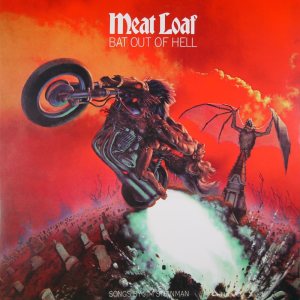
Vale to Meat Loaf (1947-2022)
Growing up in the 1970s Meat Loaf (Marvin Lee Aday) and Jim Steinman’s album Bat Out Of Hell was part of life.

If they didn’t create the power ballad, they certainly perfected it.
There was a bus trip where it played constantly.
And it sounded subversive in a way that younger teenagers gravitated towards.
It also invited raucous singing along.
The fact the album cover was painted by comix artist Richard Corben was also a plus.

His appearance in the Rocky Horror Picture Show was also a standout cameo.
In later years it was fun watching him as a character actor popping up in a variety of roles.

Phillips Brooks observes that a series of sermons constrains a preacher and that the challenge is to maintain a consistent vitality from beginning to end.
Some evangelical churches that do not follow the lectionary use sequential expositions or series.
While sequential expositions have the advantage of unfolding Scripture to the congregation week by week as laid out in the Bible, topical series can be a challenge to start, continue, and conclude in a consistent way. Their length can sometimes mean arbitrary inclusions.
It calls for a lot of discipline.
I’ve been using one sort of topical series each year, mostly for the variation and interest that nine or ten weeks of focus can allow.

The only serious danger about a course of sermons is, that where the serpent grows too long it is difficult to have the vitality distributed through all its length, and even to his last extremity. Too many courses of sermons start with a very vital head, that draws behind it by and by a very lifeless tail. The head springs and the tail crawls, and so the beast makes no graceful progress. I think that a set and formally announced course of sermons very seldom preserves both its symmetry and its interest. The system of long courses is apt to secure proportion at too great an expense of spontaneity.

Phillips Brooks, The Joy Of Preaching, Kregel Classics, 1989, pg. 120.