A post in which J.A. Medders points out that any sentimental, nostalgic appeal to become more like the early church is not the solution to the church’s current problems and challenges.
After all, much of the New Testament was written to address the needs of the church, not because of its strengths.

So, tell me again, which early church you want to go back to? Immorality, persecution, division, theological confusion, legalism, and attacking the apostle Paul is what’s on the menu.

The answer to our present need is the same answer that was provided to the early church for their problems and challenges:

We don’t need to go back to the early church—we are already like them. But we do need to go back somewhere.
The only perfect church, filled with non-problematic people is in Heaven. Be faithful in the present without wishing for the past.
We must always go back to the teachings of the early church, the New Testament, but the church itself was a mess. Much like today. We are a mess, too, so we go back to the teachings that went to our messy brothers and sisters. We learn from them and the teachings—not to be like them, but to be faithful to our risen Lord.
We go back to the apostolic teaching. We go back to the Bible. We go back to Christ. A church that does that is who we should want to be.

Source.

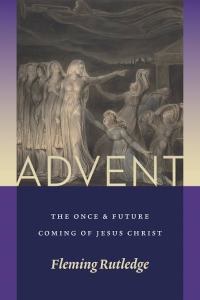
Fleming Rutledge reflects on Christian life as a time of waiting, doubt, and preparation.

In the last week of his life, Jesus went to the temple every day to teach. He was engaged in a fight to the death, literally, with the religious leaders. This whole section of the Gospel of Matthew is always read toward the end of the church year; it projects an atmosphere of impending crisis. The parable of the ten Virgins, or bridesmaids, is one of the very last that Jesus told. We are meant to see ourselves in this story. Ten young women with lamps and oil are waiting for a wedding procession. It is midnight, and the bridegroom has not come. The lamps are burning low. Maybe he is never coming. Maybe the whole thing was a mistake.
Midnight is the time of the church year that we are in. This is the time for asking if there is some mistake, for, as W. H. Auden wrote, “Unless you exclaim — ‘There must be some mistake’ — you must be mistaken.”

Fleming Rutledge, Advent – The Once & Future Coming Of Jesus Christ, Eerdmans, 2018, pg 91.

Michael Milton asks whether pastors see themselves as a CEO or a shepherd.
The answer will impact not just on a style of leadership, but on the nature of the body being led.

He contrasts a purpose statement from a chief executive officer with one of his own creation about pastoral ministry:

CEO Leadership
First, Mr. Welch, the CEO, and leadership:
“Good business leaders create a vision, articulate the vision, passionately on the vision, and relentlessly drive it to completion” (Jack Welsh, CEO General Electric, 1981 – 2001).
Now, let me compose a summary statement of the Christian Shepherd according to the scripture that follows:
Christian Pastoral Service
“Steadfast and wise pastoral leaders follow Jesus the Lord and most faithfully fulfill His mission in the world as they locate God‘s vision, connect His vision to God’s Burden for the lives of His people, help others to see and embrace God’s vision, and pray without ceasing” (MAM).

Milton’s observation:

One of the sad things about western culture today is that many congregations have bought into the vision statement of Jack Welch, dismissing the scriptural teaching on pastoral servanthood as possibly “helpful” for a pastoral “temperament,” but ineffective for (what seems to be the priority) an organizational mission. This is not only to be regretted, but it is also to be decried.

And his conclusion:

I wish the General Electric Company the very best. And I pray for the mission of Jesus Christ in our world today. The former may, indeed, need to “relentlessly drive” vision to achieve their goal, though I question the wisdom of “driving” concepts onto human beings in any setting. But it is indisputably certain that the latter will only realize the vision of Christ by imitating His life.

Read the whole post here.

Rend Collective’s Boldly I Approach works better than I thought it would at first.
The lyrics are as thoughtful and strong as most of their output. And their folk-music styling makes it accessible to sing.

The lyrics:
1
By grace alone somehow I stand
Where even angels fear to tread
Invited by redeeming love
Before the throne of God above
He pulls me close with nail-scarred hands
Into His everlasting arms
2
When condemnation grips my heart
And satan tempts me to despair
I hear the voice that scatters fear
The Great I Am The Lord is here
Oh praise the One who fights for me
And shields my soul eternally
Chorus
Boldly I approach your throne
Blameless now I’m running home
By your blood I come
Welcomed as your own
Into the arms of majesty
3
Behold the bright and risen Son
More beauty than this world has known
I’m face to face with love Himself
His perfect spotless righteousness
A thousand years, a thousand tongues
Are not enough to sing His praise
Chorus x 2
Bridge
This is the art of celebration
Knowing were free from condemnation
Oh praise the One, praise the One
Who made an end to all my sin
Repeat bridge
Chorus

Writers: Rend Collective
Copyright © 2014 Thankyou Music