When Your Kingdom Comes by Paul Zach featuring Jessica Fox.
A song of comfort in the assurance of the coming kingdom and everything being set right.

The lyrics:
1.
Every wrong will be turned to right
You’ll wipe the tears from every eye
When Your Kingdom comes
Dark will make way for the dawn
All our sorrows will be gone
When Your Kingdom comes
Chorus.
Night will turn to day and your church will sing
Take your bride away when your Kingdom comes
You will make a way through our darkest day
Shadows fly away, when your Kingdom comes
2.
Every trouble we have known
We will lay before your throne
When your kingdom comes
We will bring you all our grief
Every tear will be redeemed
When your kingdom comes
Chorus.
Repeat Chorus.

Words and Music: Paul Zach | Philip Zach
© Paul Zach Publishing (Admin. by Crossroad Distributors Pty. Ltd.)
The Grid Publishing (Admin. by Crossroad Distributors Pty. Ltd.)
Heidelberg Catechism – Lord’s Day 11

29.
Q. Why is the Son of God called JESUS, which means SAVIOUR?
A. Because he saves us from our sins, and because salvation is to be sought or found in no other.

30.
Q. Do those who seek their own salvation and well-being from saints, by their own efforts, or by other means really believe in the only Saviour Jesus?
A. No. Rather, by such actions they deny Jesus, the only Saviour and Redeemer, even though they boast of belonging to him. It therefore follows that either Jesus is not a perfect Saviour, or those who receive this Saviour with true faith must possess in him all that is necessary for their salvation.

I wish I had more of a faith that rests in the peace God provides, rather than a faith that wishes God would fix things the way that I think would bring me peace.

From Scotty Smith at Heavenward.

“Trust in the LORD with all your heart and don’t lean on your own understanding” (Prov. 3:5). “Blessed are those who fear the Lord… They will have no fear of bad news; their hearts are steadfast, trusting in the Lord.” (Psalm 112:1, 7) (Ephesians 1:18)

Heavenly Father, another weekend brings with it dozens of opportunities to trust you with “stuff” we would (I would) rather control. The difference between trusting you from my heart, or having my heart taken over by fear, irritation, anxiety, and anger… well, it’s never been clearer to me.
It’s not a pretty sight, but I am seeing how easily I can replace just trusting you, with trusting you for certain outcomes. It’s the difference between (1) resting in your grace and love, knowing you’re at work as my sovereign, loving Father… VERSUS… (2) vexing in my fear and “control-freak-ness,” anxious for you to do things my way on my schedule.
Abba, I really, really want the first of these two options to mark more of my heart, worship, and life. Leaning on the flimsy, duct-taped, straw-scaffolding of my “own understanding” never bodes well. You know the beginning, middle, and end of all things. My perspective and understanding are riddled with my agenda, druthers, and desires for my life. All of those things aren’t bad; but not all of them are your will for my life.
Whether it’s “bad news” I get — or inconvenient disruptions, irritating changes, or circumstances that “blow up” my much looked-forward-to plans… Father, give me a steadfast, trusting heart. In my heart of hearts, I DO want you more than I want my way. So Very Amen.

source

The warnings about public displays spiritual activity, particularly those focused on repentance may lead to a neglect of those activities, or suspicion of those who we know carry them out.

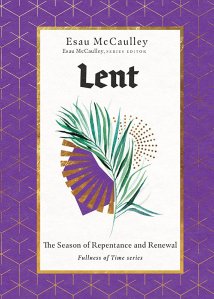
Esau McCaulley, in his book Lent – The Season Of Repentance And Renewal helpfully points out that the direct application is not the activity or where it is done, but the motivation behind performing it and who we are primarily thinking is observing us.
McCaulley writes about the teaching of Jesus and Isaiah who challenge God’s people about carrying out spiritual activity in a way that seeks the notice of others.

There are numbers accounts of public penance in the Bible. The people of Nineveh covered themselves in sackcloth and ashes and fasted in response to the preaching of Jonah. The problem isn’t that it is public; the problem is that it is for the public. Isaiah and Jesus make points that are much more subtle than we give them credit for. Both speak to the human heart, and getting to the bottom of its mystery is complicated. Any act can be directed toward God or other people. Jesus calls on us to examine our motives. If the problem is with our hearts, merely avoiding rituals won’t save us from danger. We can make a show of not fasting or engaging in public acts of charity because we want people to know we are not like the legalists who do such things. In other words, there is no safe place to hide from the possibility of self-deception.
Nonetheless, discretion matters. Part of the discretion we display during Lent is trusting that rewards from God may be invisible. If we make a show before people, they reward us with respect and status. Rewards from God are designed to make us into people whose lives reflect him in the world.

Esau McCaulley, Lent – The Season Of Repentance And Renewal, InterVarsity Press, Downers Grove, IL. 2022, pgs. 23-24.