Crucifixion was intended to erase those who were subjected to it from history.
Forgotten and not worth remembering.
Yet one individual who was crucified is not only remembered, but has defined history.
What made the difference for that one individual?
Resurrection.

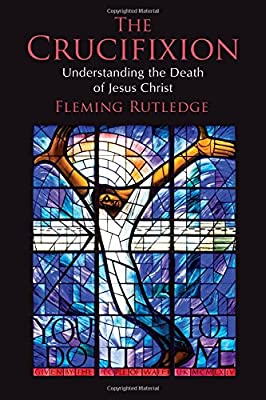
From Fleming Rutledge.

It should therefore be affirmed with no ambivalence or ambiguity whatsoever: ours is an Easter faith. One of the defects of Mel Gibson’s world-famous but deeply flawed film The Passion Of The Christ is that is focuses exclusively and in detail on the suffering and death. Christ’s resurrection appears in so glancing and obscure a fashion that it might as well not be there at all. It cannot be said too often: if Christ was not raised from the dead, we would never have heard of him. Tens of thousands were crucified in the Roman era; of all of these, the name of Jesus of Nazareth is the only one known to us. He was consigned to the oblivion designed by Rome for crucified victims, but within weeks was proclaimed as the name above all names (Acts 4:12). “If Christ has not been raised, your faith is futile and you are still in your sins” (1 Cor. 15:17).
However, in interpreting the cross and resurrection for the church, it is important to understand that the resurrection from the dead did not cancel out the crucifixion; it vindicated the crucifixion. The resurrection enabled the first disciples to understand what the death had accomplished, and the preaching of the cross by Paul is grounded in that new and revelatory connection.

Fleming Rutledge, The Crucifixion – Understanding The Death Of Jesus Christ Eerdmans, Grand Rapids MI, 2015, pg 493.
It seems like I’ve never posted Iris Dement’s rendition of Leaning On The Everlasting Arms.
The first time I heard it (at the end of the Coen Brothers’ version of True Grit) my initial response was quite negative.
But pretty quickly her recording and the album it comes from (Lifeline) endeared themselves to me.

Come Ye Souls, vocals by Michael Card with a tune by Greg Wilbur.
This is from a remastered collection of Wilbur’s tunes called In Beauty Of Holiness.

Conflict becomes enculturated or habituated when the originating issue becomes a competition by individuals or groups to prevail.
Leading through conflict so that this does not occur, or leading in a conflict culture to grow a group into a better relational matrix requires recognition of what the outcome should be: growth in knowledge and attitudes that help ensure that future prompt points of conflict are better dealt with.
The leader also has to ensure that they don’t make their own involvement doesn’t become about victory and not learning.
We don’t stand disengaged, we stand committed to be involved on the basis of the character that we hope to see growing in others.

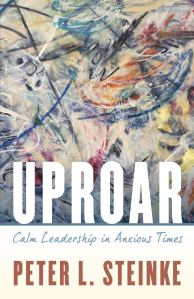
From Steinke.

Conflict is a learning time, greatly depending upon the maturity and motivation of the system’s leadership.
Bogged down in a stand-off, people are apt to use conflict as a way of carry out a competition, than of education. The situation becomes increasingly negative and hostile. People are anxious about “losing” or appearing “weak” or being humiliated. This only stiffens their will to prevail.
Though not easily accomplished, what is required is action, not victory. Someone has to provide a way to focus and to engage the people’s imaginative capacities. How can we move from argument to explanation? If we don’t, we’re entailed in nothing but a trial of strength. How can we use our ingenuity to address our predicament instead of defeating the other side? Leaders are needed who can help design an outcome instead of arbitrating or refereeing an emotional wrestling match.
Peter L. Steinke, Uproar – Calm Leadership In Anxious Times, Rowman and Littlefield, 2019, pg 117.