I think Senza Gluten-Free Flour is as good as any product of its type.
Especially as one of our dietary needs means potato flour can’t be an ingredient.
It’s little hard to find, but worth the search.
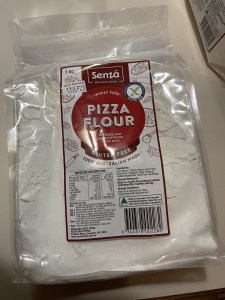

I think Senza Gluten-Free Flour is as good as any product of its type.
Especially as one of our dietary needs means potato flour can’t be an ingredient.
It’s little hard to find, but worth the search.
There are jobs in big cities that I find bemuse my small town perspective.
Years ago I was intrigued to hear radio ads for a business that did nothing else but mount plasma screen tvs on walls.
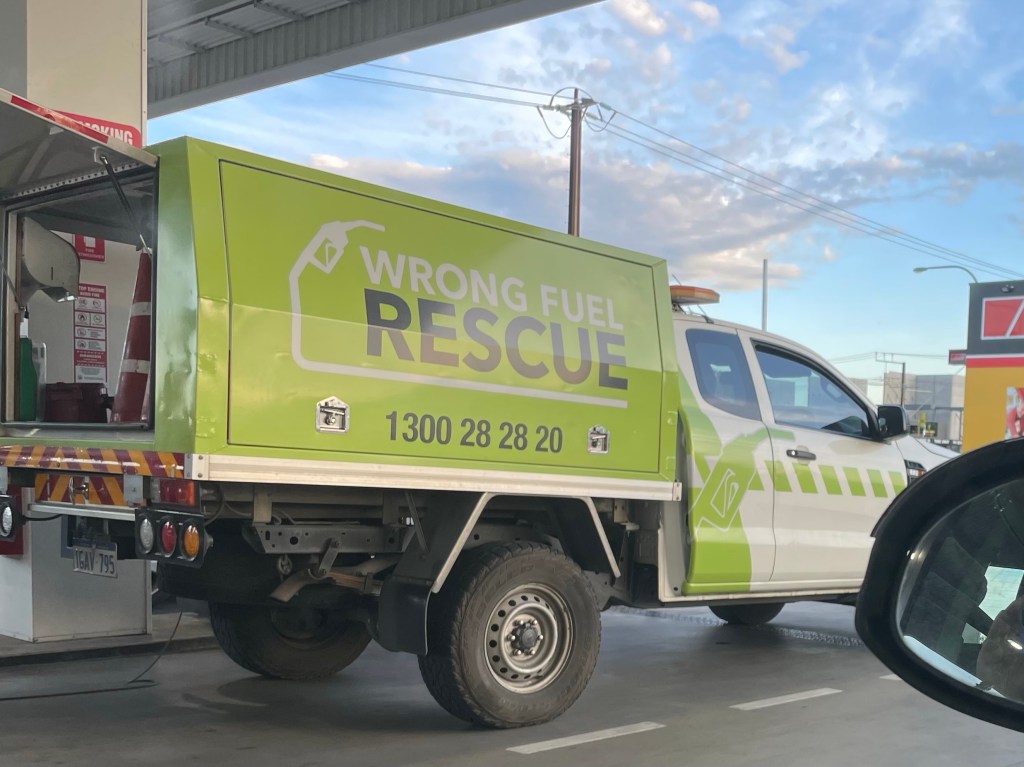
Today we saw this business in operation at Costco fuel in Adelaide. Wrong Fuel Rescue. The name tells it all.
At home if you put the wrong fuel in the tank I think someone could help. But they wouldn’t be a sole branded business.
Ah. The opportunities of city living.
The desire to be unique and special is a voracious master that devours those who feed it.
Instead of security, all it gives is a gnawing fear that we are enough.
In Jesus, God bids us find peace and identity for all of us who are not special.
We are something better than that.
We are loved.
Colette Eaton writes about her own efforts to create a reality where others would think she was special – an effort to convince herself she was more than ordinary, and how she found a better sense of being.
We all want to feel special. The problem is … we aren’t all that special, not according to how the world defines it. Not many of us will be famous or rich or have a legacy that lasts for centuries. But there is one thing we are unmistakably: fully loved by God.
+++
It takes courage to face our limitations and imperfections.
+++
But it also takes courage to embrace the truth of our own belovedness, to give up the fight to be special, and instead rest in simply being loved. Though the story of Jesus can often feel like a fish story, it is the most real story there is, and letting this truth sink in will take a lifetime, not just a conversion. A story that softens the hard edges of our stories and welcomes us to a table to eat with other ragtag followers.Read the whole post at Mockingbird.
Alan Jacob’s book Breaking Bread With The Dead is an invitation to read and engage with authors from past generations, and not disconnect ourselves from lessons we may glean by dismissing them because of their prejudices, failings, and non-conformity with contemporary moral and ethical standards.
The book’s subtitle is Reading the Past in Search of a Tranquil Mind. A tranquil mind is one that has developed a historically informed and connected perspective that is not bound to only obey “the impulses of the moment”.
To read such works is not to endorse their authors, or even the totality of their works.
It is to be informed by the past in order to enrich our present and future.
It is invite perspectives that are unlike our own to the table rather that simply confining ourselves to points of view that are identical to our own.
In various disciplines, including theology, it is fashionable to question reading certain books from centuries past because their authors fall short of contemporary cultural standards.
But these voices from the past have no intrinsic power. We only hear them at our invitation, and on our terms.
The dead, being dead, speak only at our invitation: they will not come uninvited to our table. They are at our mercy, like that flock of shades who gather around Odysseus when he comes as a living mad to the land of Hades: they remain silent until their tongues are touched with the blood of the living. What the dead we encounter in woods demand is only th blood of our attention, which we are free to withhold.
Me plea is that we do not withhold it, that we use our power to give them utterance. We can always, if they shock us too greatly, turn aside and render them silent again.Alan Jacobs, Breaking Bread With The Dead, Profile Books, 2020, pg 29
 mgpcpastor's blog