Things went a bit awry with the AFL last week. Don’t really know what it was, though. Let’s see if things get back to normal or not. If Melbourne and North Melbourne could work out whether they’re serious or not and let the rest of us know, it would be helpful though.
In the NRL North Queensland continue their gap year. Jonathan Thurston is a great, but he’s trying to fit a one-year return from an injury that would normally see him at his best next year. And apparently New Zealand have decided to play this year. It’s about time. At least until this week…

NRL (last round 6/8; season tally 58/108)
Souths
New Zealand
Penrith
Canterbury
Saint George
Cronulla
Melbourne
Canberra

AFL (last round 3/7; season tally 76/105)
Port Adelaide
West Coast
Fremantle
Saint Kilda
Hawthorn
Richmond

The Atlantic is a print and online journal that deals with culture and politics.
This article about people having different learning styles (i.e. visual or aural), a proposition that simply entered public consciousness as truth a decade or two ago, has had profound impacts for teachers and communicators.
The substance of the article is the concept of people being able learn more effectively through the means that is most suited to them is not proven and doesn’t hold true when tested.
The rise of the proposition has more to do with individualism and self-esteem philosophies than effective education.
Just because you prefer a particular means of information communication, it does not necessarily follow that that particular means is actually most effective in every situation.

[a] study published last year in the British Journal of Psychology found that students who preferred learning visually thought they would remember pictures better, and those who preferred learning verbally thought they’d remember words better. But those preferences had no correlation to which they actually remembered better later on—words or pictures. Essentially, all the “learning style” meant, in this case, was that the subjects liked words or pictures better, not that words or pictures worked better for their memories.

A takeaway from this is to focus not so much on the learner, but on what is the best means of communicating the information at hand.
There will be different communication techniques that are appropriate for different outcomes, but the outcome should be a primary determiner of means, rather than the preference of the learner.

Read the whole article online at The Atlantic.

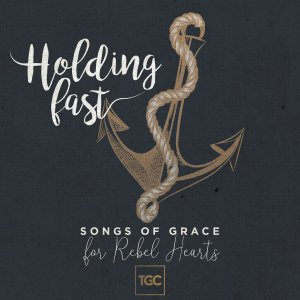
Holding Fast: Songs Of Grace For Rebel Hearts
A compilation album featuring some musicians I know and others I’m going to get to know.
The blurb from the Gospel Coalition:

Songs shape our theology. Curated specifically with TGCW18 and the book of Deuteronomy in mind, the songs of Holding Fast will help you remember God’s faithfulness and respond in obedience and worship. As God holds fast to us in covenant love, we are compelled to hold fast to Him.

As a compilation (drawn from existing releases, it appears) there are stylistic differences, but thematic unity.
Download for free at Bandcamp or listen on Spotify.

I’ve been happy about not having the maintenance of an aged/decaying/historic building as part of my job description at MGPC.
So I’ve not thought of myself as a curator, someone occupied with the past.
Daniel Darling points out that there is an aspect of a pastor’s role that involves some level of curation.
We serve as conduits and gatekeepers with regard to resources and teaching for our congregation.
Even in this internet search engine driven age, pastors have the privilege of spending our time discovering and weighing up various resources.
And the trust we have means our recommendations carry weight. A teacher we value is unknown to most. It’s my recommendation of them that carries weight.
My former colleague Ian Touzel excelled at this.

From Daniel Darling:

This is a part of ministry that isn’t often mentioned in Bible college, one that I was never taught: the task of filtering and curating reliable, helpful resources for the people of God.
This early ministry experience was a fresh reminder of the gap that can exist between pulpit and pew, leadership and laity. Church leaders often live in a rarified Christian bubble; it can be easy to assume that everyone else is aware of pieces of Christian thought and culture that are just not on their radar. This is why leaders need to be proactive about leaving those bubbles and getting into the lives of their people to learn the conversations they’re a part of—and, when appropriate, invite them to participate in new ones.
In many ways, pastors and other church leaders act as gatekeepers. Church members assume their leaders are filtering out the very best kind of Christian resources and regularly making those things available. Of course, Christian content can be found in a variety of sources outside the church walls: Christian radio, the Internet, bookstores. But for the most part, church members are busy living their lives—busy with kids, careers, and finances. They depend on pastors, elders, deacons, and other mentors to be curators, to sort through the stacks of Christian content, choosing good resources and discouraging resources that confuse or distort the truth.

Read the rest of the article here.