I simply accepted the idea of the stages of grief.
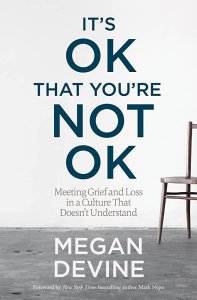
Megan Devine points out that the human tendency toward pragmatic systemisation as a method of control takes what began as an interesting set of observations that sought to support people and turns them into a rigid methodology into which every person and every circumstance are crammed.
From It’s OK That You’re Not OK.
The stages of grief were developed by Kübler-Ross as she listened to and observed people living with terminal diagnoses.
What began as a way to understand the emotions of the dying became a way to strategize grief. The griever is expected to move through a series of clearly delineated stages: denial, anger, bargaining, and depression, eventually arriving at “acceptance, at which time their “grief work” is complete.
This widespread interpretation of the stages model suggests that there is a right way and a wrong way to grieve, that there is an orderly and predictable pattern that everyone will go through. You must move through these stages completely or you will never heal.Getting out of grief is the goal. You have to do it correctly, and you have to do it fast. If you don’t progress correctly, you are failing at grief.
In her later years, Kübler-Ross wrote that she regretted writing the stages the way that she did, that people mistook them as being both linear and universal. The stages of grief were not meant to tell anyone what to feel and when exactly they should feel it. They were not meant to dictate whether you are doing your grief “correctly” or not. Her stages, whether applied to the dying or those left living, were meant to normalize and validate what someone might experience in the swirl of insanity that is loss and death and grief. They were meant to give comfort, not create a cage.
Death, and its aftermath, is such a painful and disorienting time. I understand why people – both the griever and those around them, whether personal or professional – want some kind of road map, a clearly delineated set of steps or stages that will guarantee a successful end to the pain of grief.
But you can’t force an order on pain. You can’t make grief tidy or predictable. Grief is as individual as love: every life, every path, is unique. There is no pattern, and no linear pro-gression. Despite what many “experts” believe, there are nostages of grief.
Despite what the wider population believes there are no stages of grief.
It’s OK That You’re Not OK, Megan Devine, Sounds True, 2017, pg 30-31.



 mgpcpastor's blog