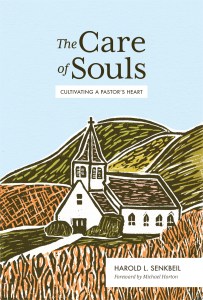
In The Care Of Souls, Harold Senkbeil reminds us that God accomplishes the work of growing the saints through the tools that Christ has entrusted to the Church, not through the personal capacities of those who wield them. This is not say that people don’t matter, it’s just important to remember what the channels that God works to bring change and growth really are.
I can guarantee you’ll be strung out, tapped out, and burned out in the ministry very quickly if you don’t grasp this one central truth: By your own power or strength you can do absolutely nothing as a servant of Christ and steward of his mysteries. I’ve seen it over and over again: A bright, gifted young pastor is driven to despair and the brink of emotional and spiritual collapse simply because he set out to do ministry relying on his own ingenuity and internal resources. Please get this straight: It’s not that you do part of the work and God does the rest; it’s not that you do a little bit and God does a Whole lot. Rather, in Christ’s church the Holy Spirit does everything.
+++
By our Lord’s own mandate, he has so arranged it in his church that we grow, are fed, nourished, guarded, and protected not out of the weakness and ineptitude of our ministers but rather by the tools Christ has entrusted into their hands. The gospel and the sacraments are not static entities—mere object lessons by which we advertise and promote the kingdom of God. Rather, the gospel and sacraments throb with vitality. They are filled to the brim with the energy and life of God’s own Spirit. The actual words that originated from the mouth ofJesus are the instruments and tools of the Holy Spirit to create and sustain faith. And just think: Jesus has given those very words to you. He has entrusted into your all too human and very flawed mouth and hands the gospel and the sacraments by which the Holy Spirit continues to call, gather, enlighten and sanctify his church on earth. You might fail; in fact, from my own bitter experience I have to say you most certainly will fail—repeatedly and spectacularly. But we believe in the forgiveness of sins also for pastors! So let me tell you this: Though you will falter and fail, God’s Spirit will not.The Care Of Souls, Harold Senkbeil, Lexham Press, 2019, pgs 28 and 30.