Pastors must have compassion and empathy for those they serve, but it is not pastoral compassion and empathy that brings change and healing.
That comes from God working through his gracious means.
This by no means excuses pastors from compassion and empathy, for these adorn the reception of those gracious means.
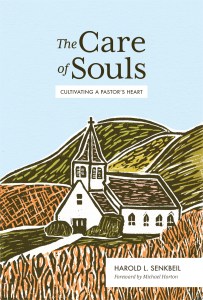
From The Care Of Souls by Harold Senkbeil:

The word of God effects or performs what it speaks. It does not merely describe things but creates things. So while you and I as pastors can — and should — express our personal care and concern to suffering souls sympathetically and compassionately, there is only a temporary measure of relief in our concern and compassion. Genuine and lasting healing comes from God, not from us.
It took me quite a while to learn that lesson in the ministry. I was under the false impression that my personal empathy was the main help I could bring to sorrowing or hurting people. Not only was I wrong, but I quickly ran out of empathy. I don’t know about you, but I have a limited capacity for compassion. And when I’m running on empty, I’ve got nothing left to give.

The Care Of Souls, Harold Senkbeil, Lexham Press, 2019, pgs 92-93.
Another home and away season comes to its conclusion this week in the AFL. For the first time in a long time two positions in the top four (or five) are uncertain, and there are conceivable scenarios for one of four teams to finish eighth. I think Geelong will probably be first, then Brisbane, West Coast, Richmond, Collingwood, GWS, Essendon, and Western Bulldogs. I also think Brisbane are a good chance to beat Richmond. They played a day earlier, and Richmond’s game was played in wet weather and would have been very draining. If Brisbane can stay close they should finish stronger.
In the NRL anything below sixth is definitely making up numbers. Easts are just waiting for the games where it counts.

NRL (last round 6/8; season tally 106/168)
Paramatta
Penrith
Souths
Cronulla
Wests
Easts
Manly
Melbourne
Canberra

AFL (last round 5/9; season tally 118/189)
Collingwood
Sydney
North Melbourne
Geelong
Greater Western Sydney
West Coast
Western Bulldogs
Brisbane
Port Adelaide

Will Willimon relates a lesson about Scripture that he attributes to learning from Karl Barth in his memoir, Accidental Preacher.
Sometimes preachers are tempted to figure out how to make texts relevant to the lives of hearers.
Scripture calls us to realise that our lives need transformation, not fine-tuning.
(You might think I’m cherry-picking all the best bits of this book, but I think all the rest is just as good as the excerpts I’ve been posting. I’m enjoying every page.)

Barth taught me that when interpreting an odd biblical text, mind the gap between you and God. The question to put to a passage of Scripture is not the modern, self-important, “How is this relevant to my life?” or, “How can I make this text make sense?” The proper question, said Barth, is, “How is God calling me to change? What would I have to relinquish , for this text to make sense?”
Scripture’s sly intent is not agreement but conversion. Something is gained, yes, but much can be lost as well. After a service, an. attendee says, “You preachers never talk about anything that’s related to my world.”
I try to find a nice way to say, “Idiot! Scripture doesn’t want to ‘relate to your world.’ Scripture wants to rock your world.”
Will Willimon, Accidental Preacher, Eerdmans, 2019, pg 95-96.

Peter Adam points out that being in pastoral ministry is not being in an environment that automatically promotes growth in Godliness and firewalls the pastor from sin.
The opposite is true.
Pastoral ministry provides a rich environment of stumbling blocks through which temptation yield the fruit of besetting sin.
Pastors can learn and those who pray for pastors can be informed of the spiritual warfare your prayers sustain your pastor through:
From Adam’s article:

People sometimes say to me, ‘it must be wonderful to do Christian ministry as your job, because it must keep you free of sin.’
I reply, ‘actually, it increases temptation and opportunity for sin, and opens up many more possible sins to commit. It also increases responsibility not to sin, because we who teach will be judged with greater strictness’ (James 3:1)!
If you found that unconvincing, you might like to think on the fact that many of our strengths and gifts carry with them potential sins.

Read the whole post at Gospel Coalition Australia.