A tendency is to run away from pain, and to think that wisdom is learning to recognise pain in order that we might escape it sooner and more effectively.
The wisdom that we learn at the foot of the cross is that we are free to move toward pain.
It is a wisdom and freedom that cannot be fuelled by fear and duty.
It is a wisdom that is the life of love into which Jesus calls us when he bids us follow him.
We recognise pain, but a greater power directs our response.

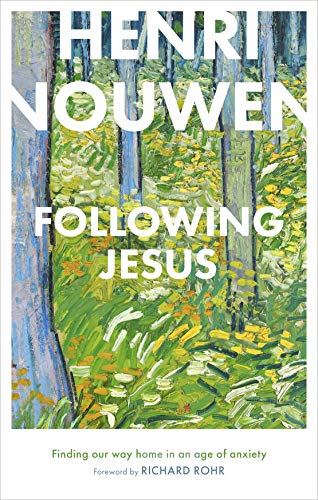
Henri Nouwen illustrates that freedom in life:

The spiritual life is a life in which we are more and more able to be led, to be guided to hard places, to places we would rather not go. For Jesus it was the cross. For Peter it was the cross. For Paul and all the disciples, it meant a lot of suffering. It is not masochism. It is not self-flagellation. It is not being hard on ourselves. It is being in love. It is being so fully and so totally in love that we go to places we wold rather not go.
The interesting thing is that when we are in love we don’t feel the pain in the way that other people think we would. If we are truly in love, our eyes are not focused on what hurts. Our eyes are focused on the person we love. We make one step, and another step, and another step, and another step. A mother or father says, “Of course I will stay with my child who is sick. I love my child. I am not going to leave my child alone.” Other people might say, “They are really suffering.” But they have the energy to stay with their child who is ill, because they love their child so much.
When we are in love we can go to very difficult places and feel, not the pain first of all, but the love.

Henri Nouwen, Following Jesus, SPCK, 2019, pgs 88.
Here are yesterday’s services from Mount Gambier Presbyterian.
Our morning music team members were not available, so I had to get by on my own. I’m sorry you can’t hear the congregational singing from Mount Gambier. One of our goals is that the Congregation is central instrument and everything else simply supports that.

In our morning service Mark’s Gospel provides the account of Jesus’ trial, where there are direct and indirect lessons to be learned. Directly, Jesus goes through the unique experience whereby he is condemned for his self-identification, a condemnation which further proves that he was who he claimed to be. Indirectly, Jesus’ experience instructs his disciples about endurance and faithfulness.

Sunday evening sees God inform the rulers of nations that they are all under his authority, a lesson which is repeated for his own people who have stubbornly resisted his rule. Rather that resisting the yoke that God provides and suffer destruction, there is a gracious invitation to accept the yoke and be preserved. It is little surprise that Jesus spoke of his own presence in the lives of his disciples as being a yoke that is easy, a burden that is light.

Consider The Stars is probably a bit of cheat as a Sunday Song.
For a Getty Music song it doesn’t readily seem as though a congregation could sing it easily.
It isn’t that complicated though and is a simple and sweet affirmation of God’s power, presence, and protecting grace.

The lyrics:
1
Consider the stars in the sky;
Look up and wonder, can you count their number?
Consider the stars in the sky;
Umbrella to hide in, a dance floor of heaven.
Do not be afraid
Do not be afraid
2
Consider the stars in the sky;
When it is darkest they shine out the brightest
Consider the stars in the sky
In every anguish, Oh, child take courage
Do not be afraid
Do not be afraid
He who made all of this, and who holds all of this,
Holds you in his hands
Do not be afraid
Do not be afraid
3
Consider the stars in the sky;
Diamond in a ring. Over the Child King.
Consider the stars in the sky;
Grace He had promised, coming to find us
Do not be afraid
Do not be afraid
He who made all of this, says “You’re worth more than this,”
And holds you in his hands

Words and Music: Keith Getty, Kristyn Getty, and Fionan de Barra
© 2015 Getty Music Publishing / Fionan de Barra (Adm at MusicServices.org)

Westminster Shorter Catechism – Lord’s Day 33

Q & A 70
Q Which is the seventh commandment?
A The seventh commandment is, You shall not commit adultery.*1

Q & A 71
Q What is required in the seventh commandment?
A The seventh commandment requires the preservation of our own and our neighbor’s chastity, in heart, speech, and behavior.*2

Q & A 72
Q What is forbidden in the seventh commandment?
A The seventh commandment forbids all unchaste thoughts, words, and actions.*3

*1 Exodus 20:14; Deuteronomy 5:18.
*2 1 Corinthians 7:2-3, 5; 1 Thessalonians 4:3-5.
*3 Matthew 5:28. ; Ephesians 5:3-4.