Fleming Rutledge reflects on the aptness of Advent and Christmas taking place during the depths of the northern hemisphere’s winter through days of extending darkness, so close to the longest night of the year.
In Australia we celebrate Christmas just after the longest day, it is 8.30pm and the homes festooned in seasonal lights still have to wait for the full effect of their bright colours to be seen. Children have to stay up past their bedtimes just to see them.
It may seem counterintuitive to be in a season of spiritual night with the radiance of summer blazing away.
And yet, all the sun’s light cannot disguise the darkness.
Disciples of Jesus down under observe Advent and Christmas in a daylight that for some is there when we wake and when we go to sleep.
It seems as if it is always there.
And yet, we cannot deny the darkness.
So, we await the dawning of the true light that will dispel the darkness forever.

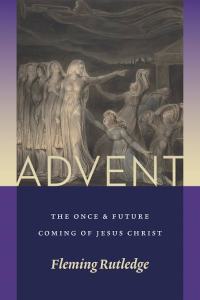
From Fleming Rutledge’s book Advent, a 2016 message:

The Advent season offers something remarkable to the church – the calling to live in two places at once. If the church is doing its job, the people of God are going to live in two places at once. If the church is doing its job, the people of God are going about their December routines in a double sense. We are shopping, decorating, baking, wrapping, and creating as much magic for the children as possible. We are burning candles and putting multitudes of lights. But in our hearts and in the worship of the church, the Advent season begins in the darkness, in the depths of the night. In the world of darkness, refugees are homeless; families shopping at a Christmas market are run down; the people of Aleppo are hunted from house to house. In our own country, we are divided and wary of one another. It is the midnight of the year. The early church knew what it was doing when it settled on the winter solstice as the date for approaching Christmas.

Fleming Rutledge, Advent – The Once & Future Coming Of Jesus Christ, Eerdmans, 2018, pgs 370-371.
Little Town by Over The Rhine begins with the familiar words of O Little Town Of Bethlehem, and then takes a walk through some of the quieter streets.
Over The Rhine produce Christmas music that recognises that, for a variety of reasons, for some people, the hope of Christmas is quiet and reflective rather than raucous and celebratory.
In 2020 I think that describes more of us than in most years.

The lyrics:
O little town of Bethlehem
How still we see thee lie
Above thy dark and dreamless sleep
The silent stars go by

Yet in thy dark streets shineth
The everlasting light
The hopes and fears of all the years
Are met in thee tonight

The lamplit streets of Bethlehem
We walk now through the night
There is no peace in Bethlehem
There is no peace in sight

The wounds of generations
Almost too deep to heal
Scar the timeworn miracle
And make it seem surreal

The baby in the manger
Grew to a man one day
And still we try to listen now
To what he had to say

Put up your swords forever
Forgive your enemies
Love your neighbor as yourself
Let your little children come to me

First verse: Traditional. Additional Words and Music: Linford Detweiler
Lyrics © 2008 BMG RIGHTS MANAGEMENT US, LLC

I shared this with the Mount Gambier Presbyterian private Facebook group yesterday, and lots of people are sharing it on various social platforms.
Simon Camilleri is a very clever communicator.
I supported his Kickstarter project children’s book When Santa Learned the Gospel.
Here his parody/tribute to Hamilton uses a familiar melodic strain with seasonal Christmas lyrics.
He does justice to both sources in conception and execution.

Dilly Carol is another Christmas song I’d never heard before being introduced to it by Kate Rusby.
It is another example of the way simple numerical progression and lyrical repetition served to reinforce memorisation of lyric and content among those who wouldn’t have had easy common access to printed materials.
Folk singing at its best.

The lyrics:
1
Come and I will sing you.
Green grow the rushes, oh
I will sing you one, oh.
Down among the rushes, oh.
One of them was all alone,
Evermore will be, oh.
2
Come and I will sing you.
Green grow the rushes, oh
I will sing you two, oh.
Down among the rushes, oh.
Two of them were lily babes,
Dressed all in green, oh.
3
Come and I will sing you.
Green grow the rushes, oh
I will sing you three, oh.
Down among the rushes, oh.
Three of them were strangers,
Come to see the babe, oh.
4
Come and I will sing you.
Green grow the rushes, oh
I will sing you four, oh.
Down among the rushes, oh.
Four the four evangelists,
Down among the green, oh.
5
Come and I will sing you.
Green grow the rushes, oh
I will sing you five, oh.
Down among the rushes, oh.
Five are ferrymen in the boat,
Sailing on the sea, oh.
6
Come and I will sing you.
Green grow the rushes, oh
I will sing you six, oh.
Down among the rushes, oh.
Six the gospel preacher,
Stories all to tell, oh.
7
Come and I will sing you.
Green grow the rushes, oh
I will sing you seven, oh.
Down among the rushes, oh.
Seven the stars all in the sky
Shining there above, oh.
8
Come and I will sing you.
Green grow the rushes, oh
I will sing you eight, oh.
Down among the rushes, oh.
Eight is for the morning break,
When all the birds awake, oh.
9
Come and I will sing you.
Green grow the rushes, oh
I will sing you nine, oh.
Down among the rushes, oh.
Nine is for the dilly bird,
Never seen but heard, oh.
Come and I will sing you.
10
Green grow the rushes, oh
I will sing you ten, oh.
Down among the rushes, oh.
Ten the hand of kindness,
Ten begins again, oh.