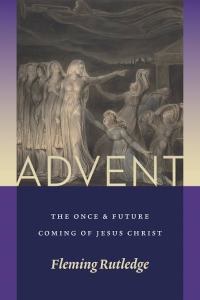
Fleming Rutledge writes about the final prophetic promise of the Christian Old Testament, and how that foreshadows the Gospel hope and the creation wide need for it.
The final words of the Christian Old Testament are quite amazing. The Hebrew Scriptures are arranged so that the prophetic literature is in the middle, but the Christian Old Testament has the prophets at the end. The last book is Malachi, and the next-to—last verses foresee a “great and terrible day,” the day of judgment and the second coming of the Lord. It will be a time when all that has been wrong will be set right. The example that Malachi gives is astonishing. At the last possible moment, he turns away from the language of wrath and flames to something very unexpected. This is the way the Old Testament ends: “Behold, I will send you the prophet Elijah [that would be John the Baptist] … He will turn the hearts of parents to their children and the hearts of children to their parents, so that I will not come and strike the land with a curse.”
The worst thing in the world, the prophet seems to be saying, is estrangement within families. It is given as the sign of the final judgment of God, his worst curse upon the human race. If you are a young person here today feeling miserable about your parents, if you are parents here today worried about your children, then this message is for you. God does not desire this situation. His will is for reconciliation. Family breakdown is a sign of the old age of Sin and Death. Reconciliation between parents and children is the sign that the kingdom of heaven is at hand.
Maybe you don’t have these kinds of problems yet in your family, but every family, over generations, will have some kind of wrenching, heartbreaking trouble. In every case, the fracturing of the most basic human connection is the antithesis of what God intends for his people. And reconciliation, when it happens, is one of the clearest of all indications that God is at work. Therefore the most important way that we can participate in the life of God is to seek reconciliation. Reconciliation is hard work. It requires daily repentance. For a number of years, I have had two distinguished psychoanalysts as teachers. I asked both of them a fundamental question: What is the most important ingredient in a strong marriage? They gave the same answer. One of them is a secular Jew so I was very surprised to hear him say, “The most important ingredient is asking forgiveness.”
Fleming Rutledge, Advent – The Once & Future Coming Of Jesus Christ, Eerdmans, 2018, pp 291-292.