Preaching for repentance is not the same thing as scolding.
It is not telling people they are bad; it is the proclamation of God’s goodness and his loving purpose and work of redemption and new creation.
This is why it is good news first and foremost.
There is no ground to confuse this with avoidance of the practical issue, which is change of heart and change of practice; instead it is grounded in a recognition of where that change of heart and practice come from.
From Will Willimon:
As Christians we must find a way to talk about difference, including racial difference, without granting our difference sovereignty. In some circles, it is less threatening to talk about racial, gender, sexual, and class difference than it is to talk about an active, resourceful, redemptive God. Nobody but God can do the work for us and in us that reconciles us to God. There preaching that confronts racism begins with God, focusing upon who God is and what God is up to in the world. A number of theological moves typically precede repentance in Jesus’ name:
We hear that God is in Christ, reconciling the world to God and people to one another,
* that Christ welcomed and died for sinners, only sinners,
* that in Christ we Gentiles have been graciously received into the promises of God to Israel,
* that Christ, in His cross and resurrection, defeated sin and death,
* that Christ is the sure sign that God has from all eternity elected to be God for us and has deleted even sinner like us to be for God,
* that there is a place where repentance is promised, rituals of repentance are offered, and regular continuing metanoia is encouraged (i.e., church),
* and that we are miraculously bound to one another in a new family, a holy people, God’s politics (i.e., church).
Only then are we free to tell the truth of our captivity: “All have sinned and fall short of the God’s glory” (Romans 3:23), and “There is no righteous person, not even one” (Romans 3:10).
What white congregations need is not blame but recognition, honest admission.
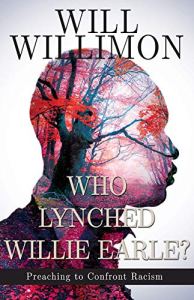
Will Willimon, Who Lynched Willie Earle?, Abingdon, 2017, pgs 74-75.

 mgpcpastor's blog