A nice observation by Clarence Jordan about the way in which Jesus’ choice of the twelve actually demonstrated the working of the kingdom at the same time as he was preparing the twelve to proclaim the kingdom.
Jordan points out that if you put a tax-collector (publican) and a zealot at close quarters you need more than a theory, you need a life changing force.
Christians have diminished this witness by affirming the theory of the Gospel and that we’re all one people in the kingdom of God, but dividing and separating ourselves into smaller and smaller kingdom-lets because that’s easier than living with the tension of unity in our differences.
… [Jesus] picked a tax collector, a publican. Now, frankly, if had been setting up a movement, I don’t believe I would have chosen a Repub- uh, publican. These fellows were not popular. Nobody liked them. They collected taxes from the Jewish people and sent it off to the Roman government. He would be just about as popular in our part of the country as a fellow from the federal government trying to enforce integration. This publican was just hated. He was a collaborationist with the occupying forces. But Jesus chose him.
Then he chose another fellow by the name of Simon the Zealot. These Zealots were very interesting people; they were the super-duper patriots of Jesus’ day. All you had to do was strike up one strain of Dixie and they would be out there waving the Confederate flag. They were all for it. Their motto was, “Save your Confederate money, boys, the South will rise again!”
In order to be a Zealot, you had to make an oath to three things. You said, one, “No tax but the temple tax.” That is, you would pay the religious tax but you wouldn’t pay the federal income tax. Second, “No lawgiver but Moses.” You wouldn’t take the decisions of the federal Supreme Court, only Moses had the right to tell his pople wharto do. And, third, “No king but Jehovah.” you wouldn’t take the laws from the Roman emperor.
Now, one other thing you had to do when you became Zealot was to swear that if opportunity ever afforded iself you would assassinate publicans. You had to look for an opportunity, and if you ever found one where you could get away with it, you would slit his throat.
So Jesus chose Matthew the publican and Simon the Zealot, the absolute opposite extremes of society, and put them in the same fellowship. Can you imagine it? I venture to say that on more than one night, Jesus had to sleep between those two boys. Poor old Matthew the publican never knew when he might wake up in the still wee hours of the night to find a cold piece of steel on his throat. If Jesus could take a wild-eyed, fanatical, patriotic Zealot and a celebrating publican and put them in the same sack and shake them up and cause them to have the love of God in their hearts so that they could walk down Main Street in Jerusalem holding hands and calling one another “Brother Matt” and “Brother Simon,” the kingdom of God was there. It was absolute proof that the reign of God had changed these people from the little old caterpillars of hate and prejudice and greed and made them into the butterflies of his new order.
When someone would say “Where is this kingdom of God that you’re talking about?” he could say, “Right there. There is Simon, there is Matthew. Here are the men that I have planted these ideas among, and here it is expressing itself.”
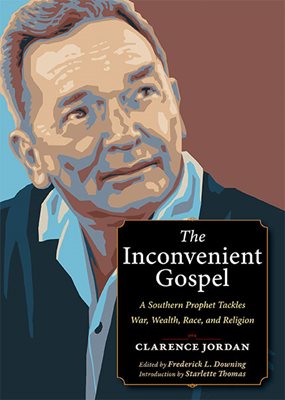
Clarence Jordan, The Inconvenient Gospel, Plough Publishing House, 2022, pgs. 74-76.

 mgpcpastor's blog