The first weekend after Summer ends and the Rugby League season starts.
One extra team. Considerable player movement.
The question mark over continued success for Penrith is based on player loss and that history is against three premierships in a row.
But the depth of the current Penrith club is also fairly unprecedented.
And their best remaining players all have room for improvement.

These tips are somewhat unscientific – I don’t always pay attention to week by week selections, or who is out injured.
It’s more a general vibe sort of thing.

(Draws count as correct)
NRL (last round 0/0; season tally 0/0)
Melbourne
New Zealand
Penrith
Manly
North Queensland
Souths
Easts
Gold Coast

The thought that grief is something you live with, rather than something you recover from – move on from – are at danger of slipping back into – are not processing in a healthy way, is a comforting thought in itself.

From It’s OK That You’re Not OK.

We are changed by our new realities. We exist at the edge of becoming. We don’t recover. We don’t move on. We don’t return to normal. That is an impossible request.
A dear friend of mine spent a good part of his early life working in mine restoration -the environmental practice that attempts to heal landscapes polluted and destroyed by intensive mining operations. This is such an intense–and often failing -prospect that many environmentalists have written off the restoration of mine sites. They are simply t00 damaged to be restored. My friend worked with, at the time, the only person who had found a way to restore these sites. It involved collaboration with native tribes, research into mineral and biological needs of various landscapes, and patient study of the land itself–watching the wounds, using them.o inform the ecological changes moving forward. The work wel is intensive, backbreaking labor. It takes decades to see the results: flourishing ecosystems, the return of native plant and animal species, a landscape healed.
My friend says that people visiting these restored sites see only the beauty there. There is no obvious evidence of the destruction that came before. But for those who did the work, for those who saw what lies beneath all that new growth, those wounds are clearly evident. There are whole lifetimes buried beneath what now appears so beautiful. We walk on the skin of ruins.
The earth does heal and so does the heart. And if you know how to look, you can always see the ravages underneath new growth. The effort and hard work and planning and struggle to make something entirely new integrated and including the devastated landscape that came before-is always visible.
That the devastation of your loss will always exist is not the same as saying you are “eternally broken.” It is saying we are made of love and scars, of healing and grace, of patience. Of being changed, by each other, by the world, by life. Evidence of loss can always be seen, if we only know how to look.
The life that comes from this point on is built atop everything that came before: the destruction, the hopelessness, the life that was and might have been.
There is no going back. There is no moving on. There is only moving with: an integration of all that has come before, and all you have been asked to live.
It’s OK That You’re Not OK, Megan Devine, Sounds True, 2017, pgs. 168-169.

So I don’t really observe Lent.
I do like really helpful writing grounded in the Lenten season.
It’s almost like giving up cynicism for Lent.

The words: “Remember that you are dust, and to dust you shall return” and the application of ashes in the shape of a cross point to the reality of death, the identification of sinful rebellion as being the cause of death, and hope – in the shape of the cross – that God’s grace can turn back the tide which humanity has called on itself.

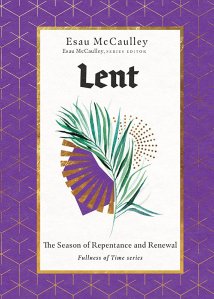
From Esau McCaulley’s book Lent – The Season Of Repentance And Renewal.

The liturgy makes a second connection as well, one that goes beyond the symbols of repentance found in biblical depictions of mourning. It takes us back to the origin of all our pain. Ash Wednesday evokes the punishment arising from the fall, when God says to Adam and Eve, “Dust you are and to dust you will return” (Genesis 3:19). In other words, the sadness of Lent is not a general sadness about the inevitability of death but an explicitly Christian diagnosis of the cause of death. We sin and die because humanity rebelled against God. There is nothing natural at all about death. It is an alien intrusion into the good world God created. It is an enemy to be defeated. On Ash Wednesday we remember that we will die, but we do not accept it as the inevitable reality of the human ex- perience. Even in our acknowledgment of death there are hints of our rebellion against it.

Esau McCaulley, Lent – The Season Of Repentance And Renewal, InterVarsity Press, Downers Grove, IL. 2022, pgs. 13-14

Reading and reflecting is part of what I do.
Reading is also something that I’ve loved doing all my life.
It’s been a lot harder. And easier to avoid.

I find fiction is a way back into reading.

From It’s OK That You’re Not OK.

I hear the same thing from just about everyone in grief’s ally days: grief obliterates their ability to read, comprehend, and sustain attention. Forget reading several books at once, as you used to. Reading one chapter even one page–is emotionally and mentally taxing.
+++
No matter how much of a book person you were before your loss, your capacity to read has most likely been impacted by grief. There’s not much you can do about that. For some, their comprehension returns, but their attention span never returns to its pre-loss state. For many others, comprehension and attention span gradually return, but their areas of interest in reading and learning take a completely new path.
If you’re grieving this secondary loss of your reading ability, know that, in most cases, it is transitory. It just takes longer than you might think to regain (or rebuild) your reader’s mind..
It’s OK That You’re Not OK, Megan Devine, Sounds True, 2017, pgs. 127-128.