
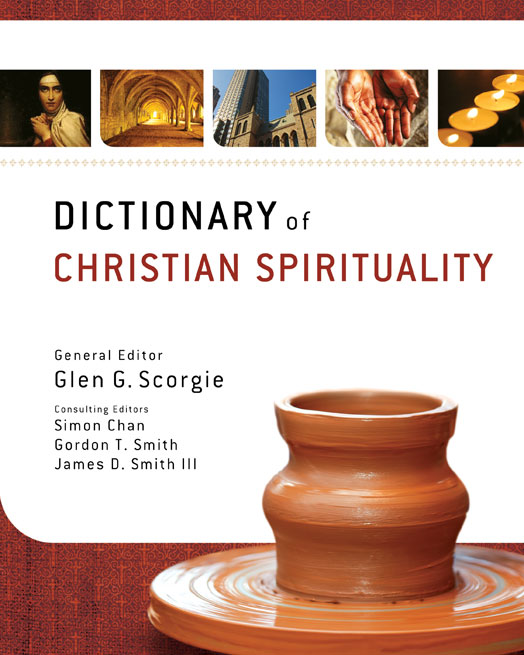
The Dictionary of Christian Spirituality
(Gen. Ed., Glen G. Scorgie, Zondervan, 2011)
 What does it promise?
Thirty-four ‘integrated perspective’ essays (contained in the first quarter of the book’s 850 pages) and then nearly seven hundred alphabetically arranged entries on subjects and persons that pertain to Christian spiritual formation, contributed by over 200 writers from a wide spectrum of the protestant and evangelical Christian tradition.
What I appreciated.
The comprehensiveness attempted and achieved. I am not an expert in Christian spiritual formation, but leafing through the dictionary section there are entries dealing with names often referred to in such works: Oswald Sanders; Martin Luther; Ephrem the Syrian; Dietrich Bonhoeffer; Eugene Peterson; Henri Nouwen; Flannery O’Connor; John Calvin; Francis of Assisi; Horatius Bonar; Hildegard of Bingen; John Milton and many, many others. Subjects include: Celtic Spirituality; Russian Spirituality; Fruit of the Spirit; Death and Dying; New Age Spirituality; Detachment; Retreats; and more. Some of these I’m familiar with, others not, this dictionary is a ready reference to use instead of Google to find out more when people like these are referenced. Entries typically include detail about the individual and their contribution to the subject of Christian formation, with references to other relevant entries and suggested further reading.
The temptation is strong just to flip from entry to entry. It is a very browsable book.
The essays in the first quarter of the book include: Old Testament Foundations of Christian Spirituality; New Testament Foundations of Christian Spirituality; Human Personhood; Survey of the History of Christian Spirituality; Contours of Evangelical Spirituality; and more. Again, each essay attempts to provide historical context to the subject at hand providing and insight into overall development and differentiated expressions within the Christian traditions. Sources and suggestions for further reading are provided. Evidence of up to date scholarship abound.
What I’m not sure about.
The value of this book will vary somewhat depending on where the reader identifies their marker point of ‘classic evangelical spirituality’ (from the book’s summary blurb). The book includes contributors which entail a very broad evangelicalism. This reader understands that it is possible to appreciate insights and practices from other Christian traditions without endorsing those traditions wholesale. The same would be maintained about scholarship which emanates from those whose understanding of Christian faith and spiritual formation differs from my own.
So, as with all texts that embrace broad scholarship, and by their definition are introductory by nature, critical reading and interaction are called for. Even those determined to undertake an antagonistic attitude to the subject would find it a ready source of contemporary reference material.
That note being made, the Dictionary Of Christian Spirituality looks a fine introductory resource on the subject of Christian spiritual formation for pastor, scholar and general readers interested in the subject.
(The review copy of the Dictionary of Christian Spirituality was provided by Zondervan’s Koinonia blog as part of a blog tour to mark the book’s publication. There was no compulsion for this review to be positive.)
 mgpcpastor's blog