
 What does it promise?
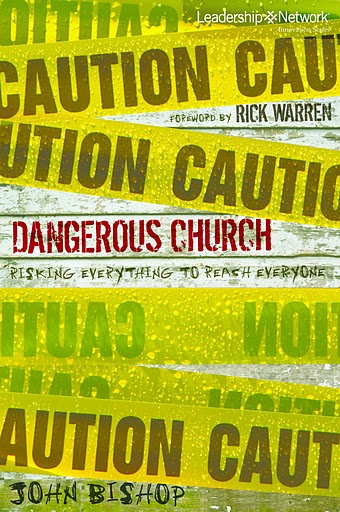
John Bishop writes about the growth of Living Hope Church in order to challenge the reader to question whether their ministry is stale and self-dependent or whether it displays that God is at work building His church.
What I appreciated.
Bishop is a skilled communicator whose passion for people to know Jesus as Saviour and Lord is clearly on display.
The four parts of the book: Risk Everything; Reach Everywhere; Release Everyone; and Remember Only God don’t convey a ‘everything you knew about church is wrong’ or ‘we need to start all over again’ mentality.
He clearly articulates his conviction that inertia and failure in mission among evangelical churches (getting stuck) can happen because a culture of playing it safe, not wanting to upset people or being committed to past programs or activities is at work. This contrasts with a healthier culture of valuing life change in individuals.
His strategies for communicating the Gospel are clear, his challenge to be aware of the costs and be prepared to incur them anyway is well grounded, and the advice is practical.
While wanting God to build His church Bishop is committed to being purposeful, passionate, and busy in kingdom work.
The chapter on ‘Stop Doing Stupid Things’ and his experience of the way that some churches acknowledge visitors in their midst was most amusing.
Bishop also candidly revealed leadership struggles in Living Hope Church and what he has learned about a leader’s trust in God through confusing and painful circumstances.
Though a multi-campus mega-church leader Bishop’s advice can be applied to any church situation.
What I’m not sure about.
Not very much.
In a book which is sub-titled ‘Risking Everything To Reach Everyone,’ the evangelistic and conversionistic emphasis of Bishop’s and Living Hope’s work is clear, the everyday work of fostering the growth of God’s people through fellowship, caring and teaching wasn’t so much. Is worship and teaching primarily directed to God and the growth of Christians, or is the primary aim decisions from non-Christians?
I didn’t feel that Bishop was questioning the integrity of other ministries and models of church, but more questioning whether we are genuinely focused on carrying out our stated mission.
There wasn’t anything really new in the book, but I like hearing basic practical truths re-expressed. (In contrast to the above-mentioned ‘everything you know is wrong’ approach’.)
Bishop is strongly committed to the multi-site, multi-campus model, and as a young church (founded 1996) it will be interesting to see how these emphases work out over time. Already the multi-campus model bandwagon seems to be moving on to something that looks suspiciously like denominations.
Conclusion.
An engaging read, Dangerous Church provides challenging questions about whether local churches are actually carrying out their mission in effective ways and also gives helpful strategies for leaders to grow in their commitment to effective outreach.
The review copy of Dangerous Church was provided by Zondervan Publishing’s Engaging Church blog as part of their Dangerous Church blog tour.
 mgpcpastor's blog
One thought on “Dangerous Church – A Book Review”