
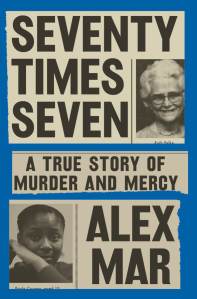
Seventy Times Seven is not an comfortable book to read or process.
It is written in such a way that it is very readable, and yet there are times when stopping and simply processing its content seems necessary.
The broad subject matter is the effort to curtail the use of capital punishment on those who committed crimes as minors in the USA in the period the 1980s and thereafter.
The focus narrows as the story of the murder of Ruth Pelke by four teenage girls, among them 15 year old Paula Cooper, is recounted. After Cooper receives her death sentence Bill Pelke, a grandson experiences a spiritual experience and resolves to forgive Paula and then enters into the movement that seeks to see her sentence changed to custody, and, more broadly revoke the use of the death penalty.
The book was researched and authored well after the crime and all legal process, and contains a record of those who committed years and decades to this advocacy.
Of particular interest are those who are family members of murder victims who oppose the death penalty.
The author, Alex Mar, states that she is not a Christian.
It is an insightful record, particularly of the cost that the application of an individual’s application of their Christian moral ethic can send them to the margins (and beyond) of their family, social, and Christian communities.
The unique aspects of US culture do stand out, but any temptation to use those as means to distance the matters at the heart of the story in a way that deflects personal introspection should be resisted.
The book evokes thoughts and feelings that defy rapid evaluation.
Rather, for me, it simply asks how we process Jesus’ declarations about forgiveness (and his own example of forgiveness) and how his disciples put them to effect, and how we pay the cost that arises when we do.
I don’t think there’s a happy ending.
But it is a worthwhile ending.
 mgpcpastor's blog