
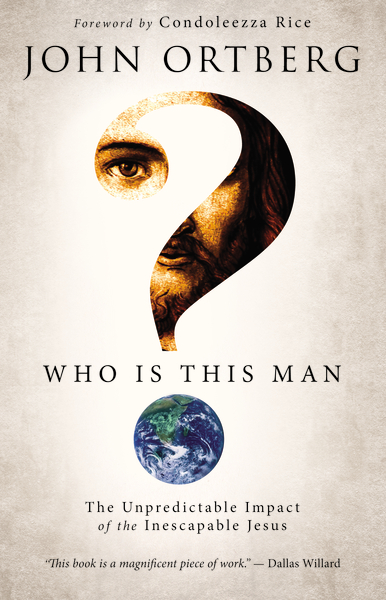
 What does Who Is This Man? (John Ortberg, Zondervan Publishers, 2012) promise?
John Ortberg seeks to identify and explain the influence of Jesus upon the history and culture of the world over the last two thousand years.
What I liked.
Ortberg is a superb communicator. Based upon a series of sermons, this material transposes to the written page with seamless skill.
In topical chapters dealing with issues such as human dignity and values; the place of women, children and the marginalised in society; the arts, international relations, and marriage, Ortberg seems to effortlessly draw in many and varied references and illustrations to serve his points.
Thought provoking and gracious, the book reminds us that Jesus and his influence saturate the values which are the foundations of modern life, and that this has taken place against prevailing values which many times were diametrically in opposition to Christianity.
The purpose of this is not triumphalism, but apologetic.
Ortberg wants to demonstrate that the influence of Jesus goes beyond simple cultural explanation and points to a reality and a power which goes beyond the reality which we observe around us.
What I’m not sure about.
Sigh.
The book features three chapters which deal with the Biblical accounts of Jesus’ death and resurrection.
In them Ortberg makes the case that these events make sense of the otherwise inordinate influence which Jesus has had over history.
To this reader they present the events of Jesus’ death and resurrection as exemplary, rather than redemptive.
Jesus’ death sets and example and his resurrection inaugurates hope, but it is not altogether clear to me that these events effected a salvation from God’s judgement.
The works of N.T. Wright are acknowledged, I wonder if this is an area in which their influence is present.
Tellingly, the story The Shawshank Redemption is preferred as the closing illustration to the body of book, seemingly because it illustrates something the biblical narrative doesn’t.
Hope, rather than atonement, is the featured motif.
There is a difference between Jesus dying for our sake, and His dying in our place.
It’s as if recognition of the incarnate Son of God, crucified and resurrected, is the essence of salvation.
Who Is This Man? is a thoughtful and thought provoking book. Preachers or others looking for well researched and skillfully written material about the influence on history and culture of Jesus’ life will find it a great resource. Reading it will provide a wealth of insights and springboards for sermon or study preparation.
It’s with real regret that I have to express that Ortberg’s overall conclusion about who Jesus is and what He has does just didn’t do justice to the superb work which is done in establishing the case that all humanity should be interested in knowing: who is this man?
I purchased my own copy of Who Is This Man? in the bookstore in the international departure terminal of Johannesburg Airport.
 mgpcpastor's blog