
These talks will be available for download at the PCA website ‘in due course’.
Sinclair Ferguson
Talk Three
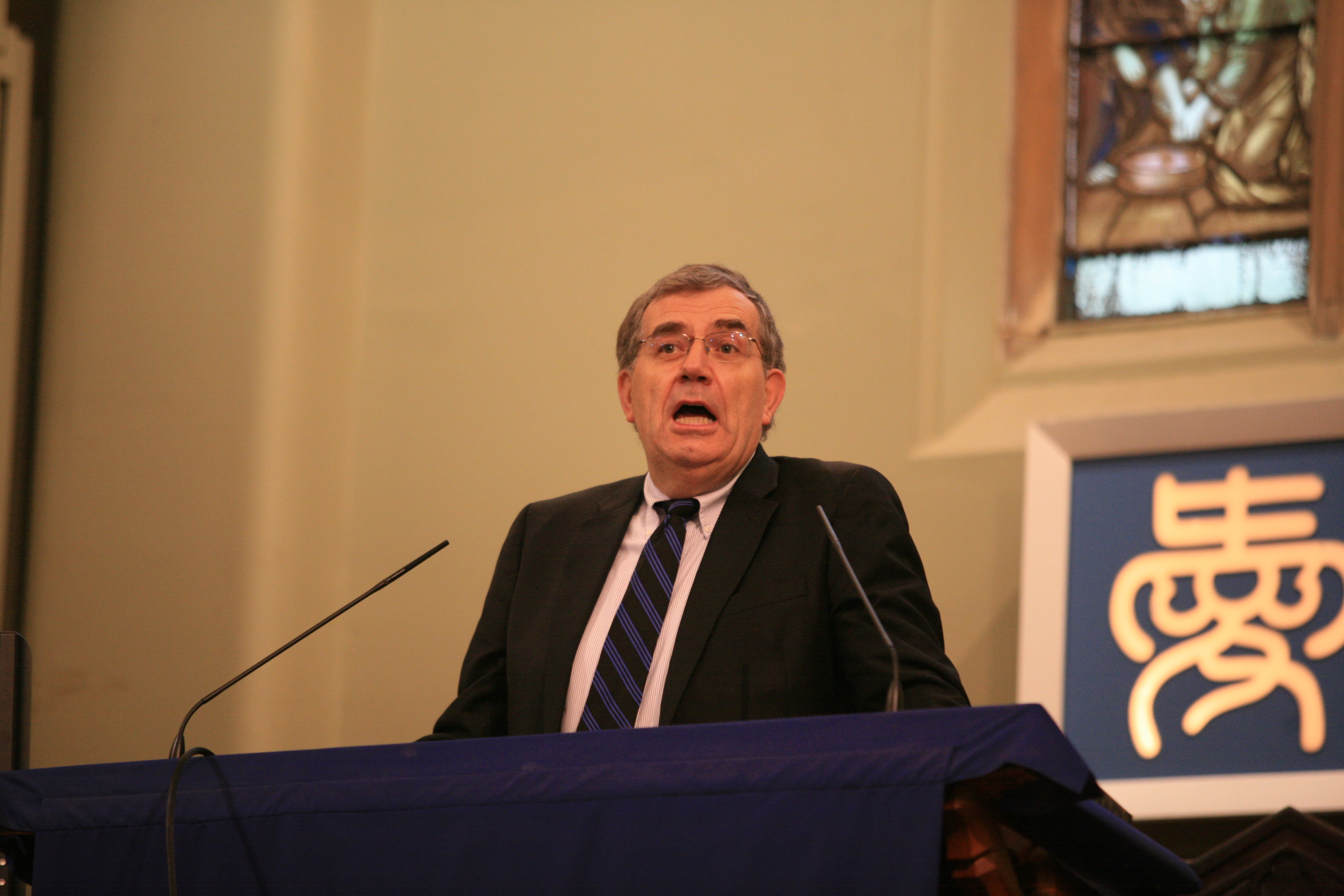
Dr Sinclair Ferguson
Hebrews 2:
Hebrews 8: 1-2
The church as the glorious family of God.
The vision of Jesus, the family which Jesus builds.
The character of the church, the community of the Lord Jesus.
Today, the worship of the church in the presence of the Lord Jesus.
The elephant in the room, the party stopper, the
Speaking in tongues, predestination, theonomy, worship. (At the mention of the word someone’s phone starts ringing with the ‘cantina’ theme from Star Wars, Ferguson quips that even the mention of the word starts music playing to the amusement of all.)
There are many different expressions of music. Some who come from conservative expression
The essence of worship: the presence of the Lord Jesus.
Insufficient to suggest that the Lord is only present with us in church discipline. The whole context embraces His presence in the midst when His people gather together to seek His mind.
The heart of worship is the presence of the Lord Jesus in the midst of His gathered people.
The Lord Jesus is the worship minister of His gathered people.
Hebrews: this is the one who is our high priest, Hebrews 8: now part of his ministry is to be the tour bus, the worship leader.
This is written to a people who were alienated from the physical locations at which they had worshipped.
It is difficult to leave the past in the presence of a new paradigm of worship.
Two fundamental principles:
1. True worship takes place in heaven, and that is where we go when we worship. Hebrews we’ve come to Mt Zion. We need to see worship is not horizontal, but vertical. Worship takes place in heave and it is there we proceed.
In the Lord Jesus Christ’s position of exaltation the three fold office continues. He is not only mediator and purifier of their worship, but as our liturgist.
‘Heaven came down and glory filled my soul’
Rather ‘Glory came down and lifted us up to heaven.’ We can experience heaven without physical death.
Jesus the liturgist: Hebrews 2. When we come to worship, Jesus gathers us as His family. Isaiah 8, a picture of family gathering. Jesus leads us into the presence of His Father. Jesus does not distinguish Himself from us, He includes us within the fellowship He shares with the Father.
Jesus has not boosted us toward the Father’s presence to worship alone, like a rocket, He accompanies us and leads us into the Father’s presence and leads our worship there. He brings us to a ‘general assembly’ week by week which we all enjoy with sublime pleasure.
Why is the question raised about offending angels? Because we are in the place where the angels bow and speak their praise to God.
The almost paradoxical tension that we are coming before the one who created the angels with faces veiled and yet we come to behold God’s light because of the work of the Lord Jesus.
Ferguson’s son graduates Oxford (all conducted in Latin) college by college and their presidents declare they have all the rights and privileges, sometimes presidents make that declaration about their own progeny.
Jesus presents us in that way.
We need to bring together the majesty of God and the family of God.
The thrill and sense of familial unity.
2. The Lord Jesus who gathers us as His family leads us in our praises.
Psalm 22: In the presence of the congregation I will sing your praises.
The author of Hebrews says that the Lord Jesus experiences all that of which Psalm 22 speaks. Part of the Lord Jesus’ priestly ministry is not to be liturgist but also praise leader, precentor or cantor.
When we sing, our frail voices and inadequate understanding there is a voice that leads us, emboldens us and joins us. It is the voice of Jesus.
Jesus knew a hymn book.
Paul’s first sign of being filled with the Spirit: singing Psalms. The balance of the sanctuary is found in the content of the song book Jesus used.
There are horizontal themes, brevity, repetition, absences of reference to God present in the Psalms.
The range of emotions present: lament, exaltation, despair, joy, thanksgiving, trust and more.
Our responsibility to craft liturgy that will please the liturgist.
3. The Lord Jesus preaches His Word. Psalm 22: I will declare Your name to my brothers.
The heart of Spirit anointed preaching, it is Christ’s voice which is heard and it is Christ who is held forth. Romans 10: how will they believe, in him whom they have not heard, unless they actually hear Him? Not just of Him.
Presbyterian sermons are a little longer: we’re not just passing information, we’re not just teaching. Anyone who thinks so has never heard the voice of Christ.
If anyone has sat under real preaching you get all the dialogue that you can handle.
If the Spirit is there the accent of the preacher will soon be forgotten.
William Barclay: Luke 24 were not our hearts strangely warmed?
A blessed New Testament kind of mysticism.
When Christ is made known as He gathers His family, leads us in worship and preaches His Word, He reveals all God’s mercy toward us.
As we preach and worship we know of the tremendously different personal situations of those who sit under the same word. When Christ is preached and, in effect preaches, the ability of our limited capacity to bring the Scriptures to bear is overwhelmed by Christ’s perfect application of His Word to every heart in a way that ministers to each.
Think of going away from worship week by week with the impressions of the heavenly places impressed upon our senses.
 mgpcpastor's blog